
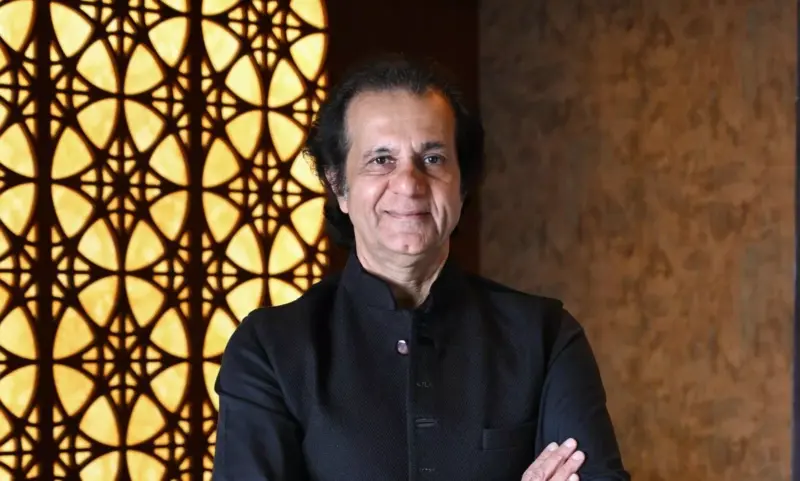

For Kamlesh Talera, Mysore silk is far more than just a fabric. It is a living archive of memory, craftsmanship, and identity that travels across generations, carrying with it stories that no trend can replace.
At a time when debates around the authenticity of Mysore silk frequently surface, he offers a grounded perspective. "There is no tool available in the market where a customer can identify whether it is pure or not," he says. "That is the biggest challenge." In a market filled with variations and imitations, he believes that trust becomes the defining factor. "What counts is the brand, the company they are buying from. Very similar to gold jewellery, people rely on names they have trusted over the years."
He explains that while a genuine Mysore silk saree is traditionally made from pure mulberry silk, the nuances of sourcing and weaving often get lost in translation for the average buyer. "It should be made from original mulberry silk, but there are many versions in the market today," he notes. For a customer, it is very difficult to just touch and feel and say this is pure." The reliance on legacy brands, therefore, becomes not just a preference but a necessity, he says.
Yet, authenticity is only one part of the story. What truly defines Mysore silk is its emotional and cultural weight. When asked why younger generations are returning to heirloom sarees despite the rise of fast fashion, his answer is immediate. "Two words explain it. heritage and legacy," he says. "Fast fashion does not leave a legacy."
He describes how silk sarees often become treasured possessions passed down through families. "More than 90 per cent of customers pass these on. A woman will say this was my grandmother's saree, then my mother wore it, and now it has come to me." These pieces are not just garments but markers of time, often brought out during conversations, celebrations, and moments of pride. "They become talking pieces. They carry stories."
The experience of buying such a saree is equally layered. "It is not just shopping. It is an experience," he explains. He recalls how families often shop together, spanning two or even three generations. "There are conversations, there is nostalgia. The grandmother speaks about her wedding, the mother recalls where she bought hers, and the younger generation listens and participates." This shared experience, he believes, is what elevates heritage shopping beyond a transaction. "There is no comparison with fast fashion. There, it is quick. Here, it is emotional."
This emotional connection extends even after the purchase. Customers often ask how to store the saree, how to preserve it, and how to ensure it lasts for the next generation. "You never ask how to store a fast fashion garment," he points out. "But here, there is already a connection."
In an era dominated by digital commerce, one might expect this experience to shift online. However, Talera sees a clear distinction. "E-commerce has helped us, but it cannot replace the physical experience," he says. While customers increasingly research online, compare designs, and come prepared, the final purchase remains largely in-store. "About 95 per cent of pure silk saree purchases are still physical," he shares. "A saree has to show how it feels on your skin. That cannot be experienced online."
To adapt to changing lifestyles, the brand has reimagined accessibility. "We started opening our stores at 6.30 in the morning," he says. This shift, introduced after the pandemic, allows families to shop together before work hours. "Decisions are faster and more confident because everyone who matters is present."
Even as tradition remains central, evolution is constant. "Customers are rooted in tradition, but tastes have changed," he says. Lighter fabrics, subtle design innovations, and evolving colour palettes are now part of the offering. "There are certain colours and patterns that are completely heritage and will never change. But there are also trends influenced globally. We adapt to those while keeping the core intact."
Sustainability is another area where heritage textiles hold an advantage. "Our product lasts for generations," he says. "It is not use and throw." Compared to fast fashion, which often contributes to waste, silk sarees require far less repurposing. At the same time, the brand is integrating responsible sourcing, eco-friendly dyes, and improved production practices. "Everyone has to make small efforts. Those small efforts will show results over time."
One of the most significant initiatives under his leadership is the Registry of Sarees, a collection of over a thousand textile pieces that are 200 to 300 years old. "We created this not as a business, but to preserve heritage," he explains. The collection serves as both an archive and inspiration. "We study these pieces, understand the techniques, and recreate them for today's customers." It is a way of ensuring that tradition is not just preserved but lived.
Working closely with weaving communities has also shaped his approach. He acknowledges the challenges faced by younger generations who are drawn to modern careers. "It has been a big challenge in the last 25 years," he admits. Instead of resisting change, the focus has been on balance. "We guide them, support them, and ensure they see value in continuing the craft while adapting to new methods."
At its core, his philosophy remains clear and consistent. "We are preserving the craft, but evolving the expression and the experience," he says. It is this balance that has allowed Mysore Saree Udyog to remain relevant across decades without losing its essence.
After more than 45 years in the industry, Talera's belief in the enduring power of heritage remains unshaken. Trends may shift, formats may evolve, and consumer behaviour may change, but legacy, he believes, will always find its way forward.